

From turquoise Indian Ocean waters to the boundless golden plains — the Serengeti safari from Zanzibar is the ultimate African adventure.
Introduction
There is a moment, somewhere over the Tanzanian interior, when the landscape below shifts from the familiar patchwork of coastal settlement and bush scrub into something vast, ancient, and utterly different from anything most travelers have ever witnessed from the air. The plains stretch out in every direction — tawny, immense, bisected by silver rivers — and if the season is right, the land below appears to pulse and move with the living mass of the Great Migration. You have arrived at the Serengeti.
Just forty minutes earlier, you were on Zanzibar — watching shows drift across a lagoon turned amber by the setting sun, salt still on your skin from an afternoon in the Indian Ocean. This is the extraordinary privilege of a Serengeti safari from Zanzibar: the abruptness of the transition, the sheer improbability of it, and the way it makes both destinations feel more vivid by contrast.
For decades, discerning travelers have recognized that combining Zanzibar’s island paradise with a Serengeti safari represents one of the finest travel experiences on Earth. This article is your complete guide to making that journey — covering the logistics of getting there, the wildlife and landscapes you will encounter, the best times to visit, how to structure your itinerary, and what distinguishes a truly exceptional Serengeti safari from a merely good one.
Zanzibar to the Serengeti: Understanding the Journey
The Serengeti is located in northern Tanzania, approximately 560 kilometers west of Zanzibar as the crow flies. Despite this distance, the journey between the two destinations is remarkably streamlined — a testament to Tanzania’s increasingly sophisticated safari tourism infrastructure.
Flying Direct: Zanzibar to Serengeti
The most efficient and atmospheric way to travel between Zanzibar and the Serengeti is by air. Multiple daily scheduled flights connect Zanzibar’s Abeid Amani Karume International Airport with Kilimanjaro International Airport (KIA) near Arusha, where connections can be made to domestic airstrips throughout the Serengeti ecosystem. Total travel time from Zanzibar to a Serengeti bush camp typically ranges from 3.5 to 5 hours, including connection time.
Alternatively, light aircraft operated by carriers such as Coastal Aviation, Auric Air, and Air Excel fly directly between Zanzibar and multiple Serengeti airstrips — including Seronera, Kogatende (northern Serengeti), Grumeti, and Lamai — offering a single-connection journey of extraordinary scenic drama. Landing on a grass airstrip deep in the Serengeti, with wildlife grazing within view of the runway, is an arrival experience that sets the tone for everything that follows.
Via Arusha
Some travelers choose to route through Arusha — Tanzania’s safari capital — breaking the journey with a night in one of the city’s excellent lodges before heading into the bush. This approach works well for those arriving on international flights into Kilimanjaro International Airport who wish to acclimatize, meet their guide, and prepare their safari kit before the adventure begins in earnest.
The Serengeti: Africa’s Most Iconic Wildlife Ecosystem
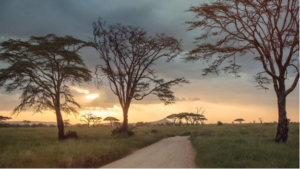
The Serengeti National Park is, by almost any measure, the greatest wildlife sanctuary on Earth. Gazetted as a national park in 1951 and designated a UNESCO World Heritage Site in 1981, it covers 14,763 square kilometers of northern Tanzania — extending northward into Kenya’s Maasai Mara to form a continuous ecosystem of over 30,000 square kilometers. The name itself derives from the Maasai word siringet, meaning “the place where the land runs on forever” — a description that remains as accurate today as it was a thousand years ago.
The Great Migration
No natural phenomenon in the animal kingdom rivals the Great Migration in scale, drama, or sheer primal power. Each year, over 1.5 million wildebeest, 700,000 zebras, and 500,000 Thomson’s gazelles undertake a continuous, circular journey through the Serengeti-Mara ecosystem, driven entirely by the seasonal availability of rainfall and fresh grass.
The migration follows a broadly predictable annual pattern that shapes when and where in the Serengeti you choose to visit:
January–March (Southern Serengeti — Ndutu Plains): The wildebeest gather on the short-grass plains of the southern Serengeti and the Ndutu area of the Ngorongoro Conservation Area to calve. Approximately 500,000 calves are born within a six-week window — a biological strategy that overwhelms predators through sheer abundance. The calving season is arguably the most emotionally intense and photographically dramatic period in the entire migration cycle. Cheetah, lion, hyena, jackal, and wild dog converge on the plains in extraordinary concentrations.
April–May (Central Serengeti): The long rains begin, and the herds begin moving northward and westward across the central Serengeti. Game viewing remains excellent, and the landscape turns a vivid emerald green.
June–July (Western Corridor — Grumeti River): The migration reaches the western corridor and the Grumeti River, where massive Nile crocodiles await. River crossings here are less celebrated than those in the north but are frequently equally dramatic and far less crowded by tourist vehicles.
August–October (Northern Serengeti — Mara River): The migration’s most iconic spectacle — the Mara River crossings. Vast columns of wildebeest and zebra approach the river’s edge, hesitate, wheel in confusion, and then plunge in their thousands into crocodile-infested waters. This is a wildlife drama at its most raw and unforgettable. The northern Serengeti during this period is where the migration reaches its cinematic peak.
November–December (Return South): The short rains arrive, the grass regenerates on the southern plains, and the herds begin their return journey southward, completing the cycle.
Year-Round Wildlife Beyond the Migration
Even for visitors who arrive outside the migration’s most dramatic phases, the Serengeti delivers wildlife encounters of extraordinary quality. The park supports year-round populations of lion, leopard, cheetah, elephant, giraffe, Cape buffalo, hippopotamus, crocodile, hyena, wild dog, and over 500 species of birds.
The Seronera Valley in the central Serengeti is one of Africa’s finest year-round predator-viewing areas, with resident lion prides and a density of leopard — often visible in the sausage trees along the valley’s river courses — that rivals any destination on the continent. Cheetahs are most frequently encountered on the open southern plains, where their speed and hunting technique are showcased against the unobstructed grassland horizon.
Where to Stay: Serengeti Safari Accommodation
The Serengeti offers a spectrum of accommodation that reflects the full range of safari travel philosophy — from intimate mobile camps that follow the migration to permanent luxury lodges offering spa treatments and infinity pools overlooking open plains.
Permanent Luxury Lodges and Camps
For travelers arriving from Zanzibar’s island comforts, the transition is smoothest at one of the Serengeti’s premium permanent properties. Lodges and camps such as Four Seasons Serengeti, Singita Sasakwa Lodge, &Beyond Serengeti Under Canvas, and Nomad Tanzania’s Serengeti Bush Camp offer world-class dining, expert naturalist guides, and accommodation standards that match or exceed anything available in international luxury hospitality — set against a backdrop of wild Africa that no urban hotel can approximate.
Mobile Migration Camps
For the most dedicated migration followers, mobile tented camps relocate seasonally to remain in the migration’s path. These camps — typically offering eight to twelve tents — provide an intimate, immersive experience with the added thrill of knowing you are sleeping precisely where the greatest wildlife spectacle on Earth is unfolding outside your canvas walls.
Mid-Range and Classic Tented Camps
Tanzania’s mid-range safari sector offers excellent value, with well-managed tented camps providing comfortable beds, good food, knowledgeable guides, and reliable vehicles at a fraction of the cost of luxury properties. For travelers prioritizing wildlife time over accommodation amenities, these camps represent excellent choices.
Structuring Your Serengeti Safari from Zanzibar
7-Night Recommended Itinerary
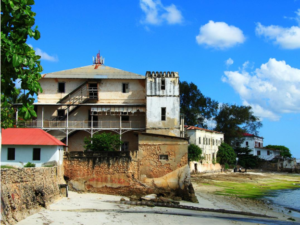
Days 1–2: Zanzibar — Arrive, explore Stone Town’s UNESCO-listed architecture, swim in the Indian Ocean at Nungwi or Paje, sunset dhow cruise on the spice-scented waters.
Day 3: Travel Day — Fly Zanzibar to Serengeti (via Kilimanjaro or direct light aircraft). Afternoon game drive from camp.
Days 4–6: Serengeti National Park — Full days of game driving, morning and evening drives, guided bush walks where available, sundowners on the plains.
Day 7: Zanzibar Return or International Departure — Morning game drive, fly out mid-morning.
10-Night Extended Experience
Days 1–3: Zanzibar — Beach relaxation, Stone Town, water sports. Days 4–6: Serengeti (Seronera/Central) — Core Serengeti game viewing, big cat focus. Days 7–8: Northern Serengeti or Ngorongoro Crater — Migration river crossings (seasonal) or Big Five crater drive. Days 9–10: Zanzibar — Final beach recovery before departure.
Key Takeaways
- A Serengeti safari from Zanzibar is one of the world’s great dual-destination travel experiences, combining Indian Ocean island paradise with Africa’s most celebrated wildlife ecosystem.
- Direct light aircraft flights connect Zanzibar to multiple Serengeti airstrips, with total journey times of 3.5 to 5 hours including connections.
- The Great Migration — over 1.5 million wildebeest and hundreds of thousands of zebras moving continuously through the ecosystem — is the anchor event of Serengeti safari travel and is visible in different forms year-round.
- The calving season (January–March) in the southern Serengeti and Mara River crossings (August–October) in the north represent the migration’s two most dramatic spectacles.
- The Seronera Valley is the finest year-round predator-viewing area in the Serengeti, with resident lion prides and exceptional leopard sightings.
- A minimum of 4 full days in the Serengeti is recommended to experience the ecosystem’s depth; 5–6 days is ideal for migration-focused visits.
- Luxury mobile camps that follow the migration offer the most immersive wildlife experience, while permanent lodges provide the smoothest transition from Zanzibar’s creature comforts.
- The dry season (June–October) offers the most reliable game viewing and the iconic northern Mara River crossings; January–February delivers the unmatched drama of the calving season.
- Always travel with a TATO-accredited operator and a qualified, experienced Serengeti guide — the difference between a good safari and a transformative one is almost always the quality of your guide.
Questions & Answers
Q: How long does it take to travel from Zanzibar to the Serengeti? Flying is the only practical method for most travelers. Direct light aircraft services connecting Zanzibar to Serengeti airstrips (Seronera, Kogatende, Grumeti) take approximately 2.5 to 3.5 hours flight time, with total door-to-door travel of 3.5 to 5 hours factoring in airport procedures and ground transfers. Routing via Kilimanjaro International Airport and then taking a domestic connection adds time but may offer more scheduling flexibility depending on your departure dates.
Q: What is the single best time of year to visit the Serengeti from Zanzibar? There is no universally “best” time — only the best time for what you specifically want to witness. For the iconic Mara River crossing spectacle, visit between August and October. For calving season drama and dense predator activity, January and February are exceptional. For lush green landscapes, fewer tourists, and excellent general game viewing, November and December offer outstanding value. The dry season months of June through October provide the most consistently reliable wildlife concentrations overall.
Q: Is it safe to travel between Zanzibar and the Serengeti? Tanzania is one of Africa’s most politically stable and safe tourist destinations. The journey between Zanzibar and the Serengeti — whether by commercial flight or light aircraft — is operated by established, safety-regulated carriers. Within the Serengeti, all game drives are conducted under strict National Park Authority guidelines with experienced licensed guides. Standard travel precautions apply: use reputable operators, purchase comprehensive travel insurance including medical evacuation cover, and follow your guide’s safety instructions at all times.
Q: Can I visit the Serengeti on a budget when traveling from Zanzibar? Yes, though the Serengeti is never an inexpensive destination due to substantial national park fees, flight costs, and the remote infrastructure required to support safari camps. Mid-range group safari tours from Arusha — combined with budget accommodation in Zanzibar — represent the most cost-effective approach. Traveling during the green season (March–May) significantly reduces accommodation costs, and group departures on shared safari vehicles lower per-person costs considerably versus private itineraries.
Q: What should I pack for a Serengeti safari after time in Zanzibar? The transition between Zanzibar’s beach environment and the Serengeti’s bush requires some wardrobe adjustment. For the safari, pack neutral-colored clothing (khaki, olive, beige — never bright colors or white that attracts insects and disturbs wildlife), lightweight layers for cool early morning drives, a warm fleece or jacket for pre-dawn departures, closed shoes or boots, a wide-brimmed hat, high-factor sunscreen, insect repellent with DEET, and quality binoculars. A good camera with a telephoto lens is essential. Zanzibar’s beach items — swimwear, sandals, light cotton clothing — can be stored at your lodge or packed separately.
Q: Do I need a visa to visit Tanzania from Zanzibar? Zanzibar is a semi-autonomous region of Tanzania, meaning travelers who have entered Tanzania legally via Zanzibar’s international airport do not typically require a separate visa for the mainland. Most nationalities can obtain a Tanzania e-Visa or visa on arrival valid for both Zanzibar and the mainland. It is always advisable to confirm current visa requirements with the Tanzanian embassy or your tour operator well in advance of travel, as regulations can change.
Conclusion
The Serengeti safari from Zanzibar is not simply a holiday — it is a journey through the full spectrum of what East Africa offers the soul. It begins in salt air and spice, in the ancient Swahili world of Stone Town’s carved doorways and the deep, clear ocean that has drawn traders from Arabia, India, and Persia for a thousand years. It ends — or rather, it transforms — on the plains of the Serengeti, where the oldest rhythms of life on Earth play out each dawn and dusk with the same unhurried power they have held since long before our species first walked upright.
The contrast is the point. Zanzibar makes you still. The Serengeti makes you alert — to every movement in the grass, every shift of light across the plains, every sound that carries across the open air in the hour before sunrise. Together they create a fullness of experience that is genuinely rare in modern travel: the feeling that you have not merely visited a place, but inhabited it, and been changed by it.
Those who make this journey return home with something they did not carry before — a quiet knowledge that the world is larger, wilder, more beautiful, and more fragile than daily life allows us to remember. The Serengeti insists on being remembered. And Zanzibar, with its dreaming ocean and amber evenings, ensures you have the stillness to do so.
Plan carefully, travel responsibly, and choose the Serengeti safari from Zanzibar. There are journeys, and then there is this one.